Tuesday, September 15, 2026. Our second day in the American capital started the way most road trips do: with paperwork. Before anything else, a small group of us headed out to the airport to pick up our rental cars. Watching a group of German students negotiate American automatics, a parking garage, and D.C. traffic at the same time was entertainment enough for the morning.
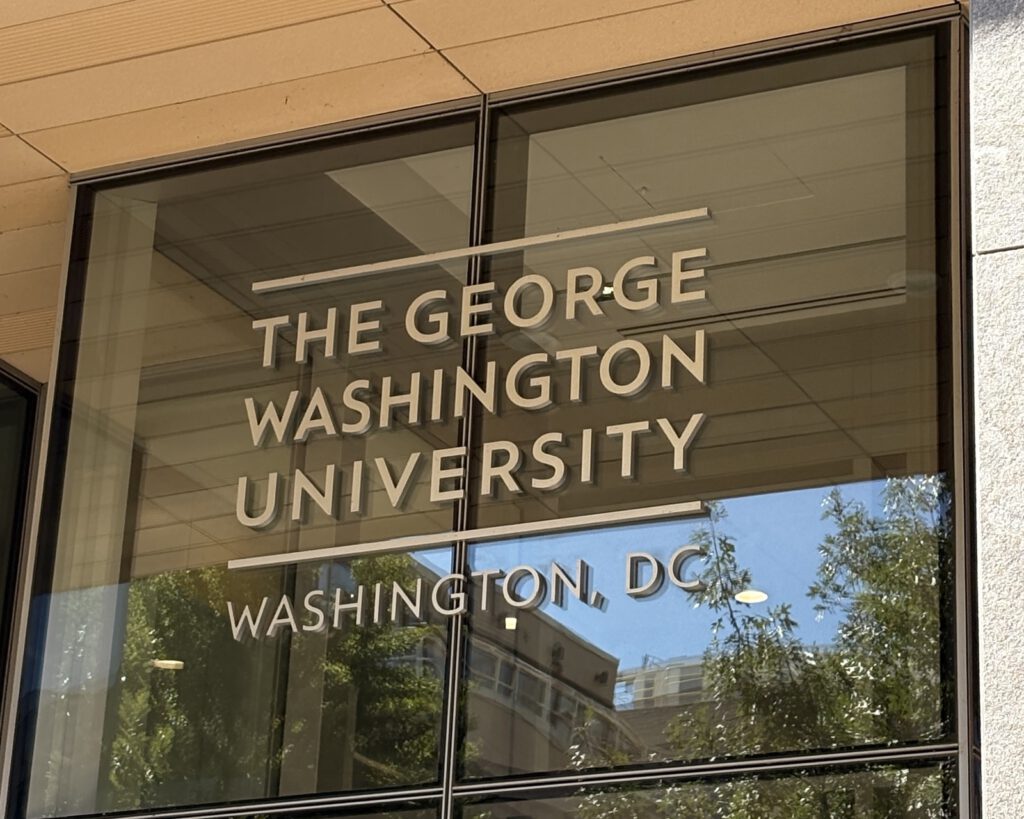
Our first stop was George Washington University in Foggy Bottom, about a ten-minute walk from the White House. If you’re used to German universities, GWU takes a second to process. There is no clearly fenced campus with one main building. The university simply is part of the city: lecture halls, dorms, cafés, and government offices sit next to each other on the same blocks, and you only notice you’ve entered the campus because the flags change.
One of the students there gave us the tour and, more valuable than any official brochure, an honest look at what student life actually costs. The numbers were impressive, especially from a German perspective, where students at public universities usually pay a comparatively small semester contribution rather than substantial tuition fees. It sparked a conversation that followed us for the rest of the day: what students get in return for these costs—from facilities and networks to career services and the proximity to the centre of American politics—and what such high costs can mean financially for students and their families. Both sides of that trade-off became much more tangible after seeing the campus.
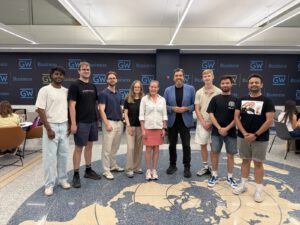
Right after the tour, we sat down with Dr. Ayman El Tarabishy from the GW School of Business for an hour and a half. On paper, the topic was “U.S. history and the political system.” In practice, it was one of those sessions where nobody checked their phone once.
Dr. El Tarabishy walked us through the founding of the country, George Washington’s role in American history, why the capital developed as a purpose-built city on the Potomac rather than in an existing metropolis, and how the university itself grew out of that history. From there, we moved on to the American electoral system, including the Electoral College and the different voting patterns across U.S. states.
For our group, the timing could not have been better. The day before, we had visited the Capitol and had the opportunity to observe part of the legislative process firsthand. Seeing the institution first and getting the structural explanation afterwards is a very different learning experience from simply reading about it at home. Suddenly, the procedures we had watched had a “why” attached to them.
Hungry and slightly overloaded with information, we walked over to the Western Market food hall near campus. With numerous different food options under one roof, everyone was able to find something. It is also a popular spot around the GWU campus, so our lunch gave us another small glimpse into everyday student life in Washington, D.C.
After lunch, it was back to the hotel to check out. D.C. was done; Norfolk was waiting.
The drive to Norfolk is about three and a half hours of pure driving time, but roughly five hours the way we did it—with stops at Welcome Centers along the way. Those rest stops were their own little cultural experience: free maps and magazines, friendly staff interested in where we were from, large vending areas, and parking lots considerably bigger than what we are used to in Germany.
The landscape became flatter and greener the further south we went, and crossing the water into the Hampton Roads area was a beautiful way to arrive.
After checking into our accommodation, the program for the evening was deliberately kept short. We went out for Mexican food, walked down to the beach for a few minutes to see the Atlantic, and then called it a night. Day 3 had a full schedule waiting for us, and everyone knew it.
Two days in, the pattern of this trip was already becoming clear: we’re not here simply to tick sights off a list. We see an institution, talk to the people inside it, and then sit down with someone who can explain how it all fits together. A campus tour shows you what a university looks like. Talking to a student about everyday university life and discussing the country with a professor gives you a much deeper understanding of what it actually means to study and live here.
For international students wondering what an academic program like VAST can offer, this day gave us a pretty good answer.
Next stop: Old Dominion University. See you in Norfolk.