Our next day started with goodbyes and hellos. We checked out of our old hotel – the one that had been perfect for day trips out of the city – and checked into the ODU Marriott, five minutes on foot from campus. No more highway commutes to get to the university. From here on, Old Dominion University was basically our front yard.
A trader who worked next to Bernie Madoff – and lived to teach about it
Our first stop was „Wall Street 101,“ taught by Andrew Cohen, and this is the kind of class you don’t forget. Cohen spent a decade as a trader at Bernie Madoff’s firm in New York in the 1990s, working alongside Madoff’s own sons. He left in 2000, well before the firm collapsed in 2008 as the largest Ponzi scheme in U.S. history – 65 billion dollars, thousands of investors wiped out. Cohen wasn’t part of the fraud, but he had unknowingly benefited from it. He now teaches finance at ODU and openly uses his own story as a warning: what does it actually mean to trust a financial system, and how do you spot the red flags everyone missed?
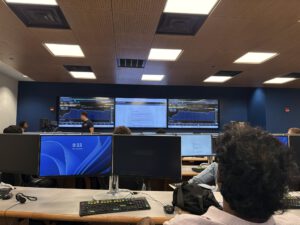
But on this day Cohen’s students took over, using Bloomberg terminals to walk us through their own stock forecasts. Watching undergrads casually pull up live market data on professional-grade software most of us had only heard of was its own kind of a thing.
Lunch with the Grad School
For lunch, Dr. Pati from ODU’s Graduate School Center invited us over to sit, eat and talk. No agenda, no slides – just an open conversation about life, from both sides of the table. It turned out to be exactly the kind of low-key exchange that ends up sticking with you longer than a formal presentation would.
Turning the tables: we became the professors
Right after lunch, the roles flipped. It was our turn to „teach“.
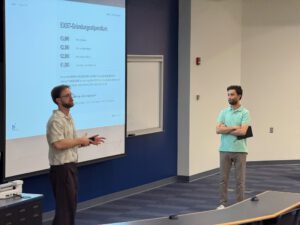
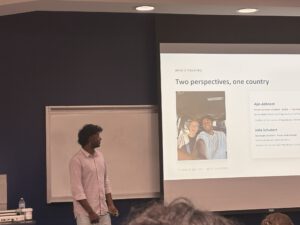
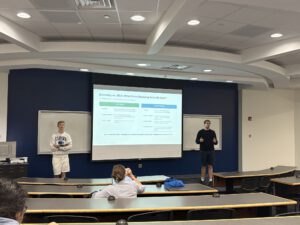
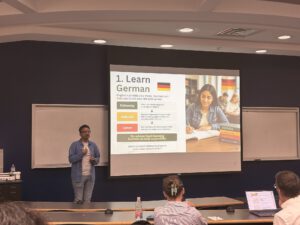
Each of us presented on something distinctly German that we take for granted and that consistently surprises Americans:
• The dual study program (duales Studium) – studying and working at a company at the same time, graduating with a degree and years of real job experience. The concept doesn’t really exist in the U.S., and you could see it clicking for a lot of students in the room.
• „The Two Doors After Graduation“ – the choice between employment and entrepreneurship, and how the German government actively pushes students toward door number two with programs like EXIST, funding a founding team’s living costs for up to a year so they can build a startup without financial pressure.
• What it’s actually like to study in Germany as an international student – how to get in, what it costs (spoiler: nowhere near 40,000 dollars a term), and what to watch out for along the way.
• Germany through Indian eyes – Ajin shared his own story of moving from India to Germany, the culture shock in both directions, and what nobody tells you beforehand.
Judging by the questions afterward, the dual study system and EXIST funding were the two biggest eye-openers of the day for our American audience.
Coffee, biomass, and a very German keynote
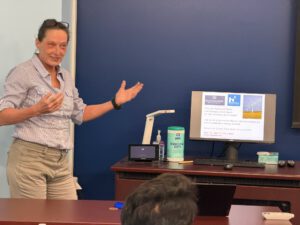
The afternoon slowed down with coffee and a conversation with Sandeep Kumar, Professor and Chair of Civil and Environmental Engineering and Director of ODU’s Biomass Research Laboratory. His lab works on turning organic waste – including algae – into biofuels using a process called flash hydrolysis, extracting usable energy from biomass in a matter of seconds instead of the hours conventional methods need. It’s the kind of research that sounds abstract until you realize it’s a genuine answer to two problems at once: waste and energy.
That connected neatly into a keynote from our own Professor Lydia Bittner on renewable energy, covering biomass power plants alongside onshore and offshore wind and solar power – a nice full-circle moment, watching our professor and an ODU professor’s research speak almost the same language from opposite sides of the Atlantic.
BBQ, cornhole, and the day’s real highlight
We closed out the day with the PhD Computer Science students and Michael Nelson, professor of computer science and one of the reasons the modern web can remember its own past. Nelson co-developed Memento, a protocol that lets you time-travel through archived versions of any website, and helped shape the standards (OAI-PMH, OAI-ORE) that much of today’s digital libraries and web archives run on – including work tied to the Internet Archive’s Wayback Machine. Before ODU, he spent over a decade at NASA Langley. Not a bad résumé for the guy standing next to you.
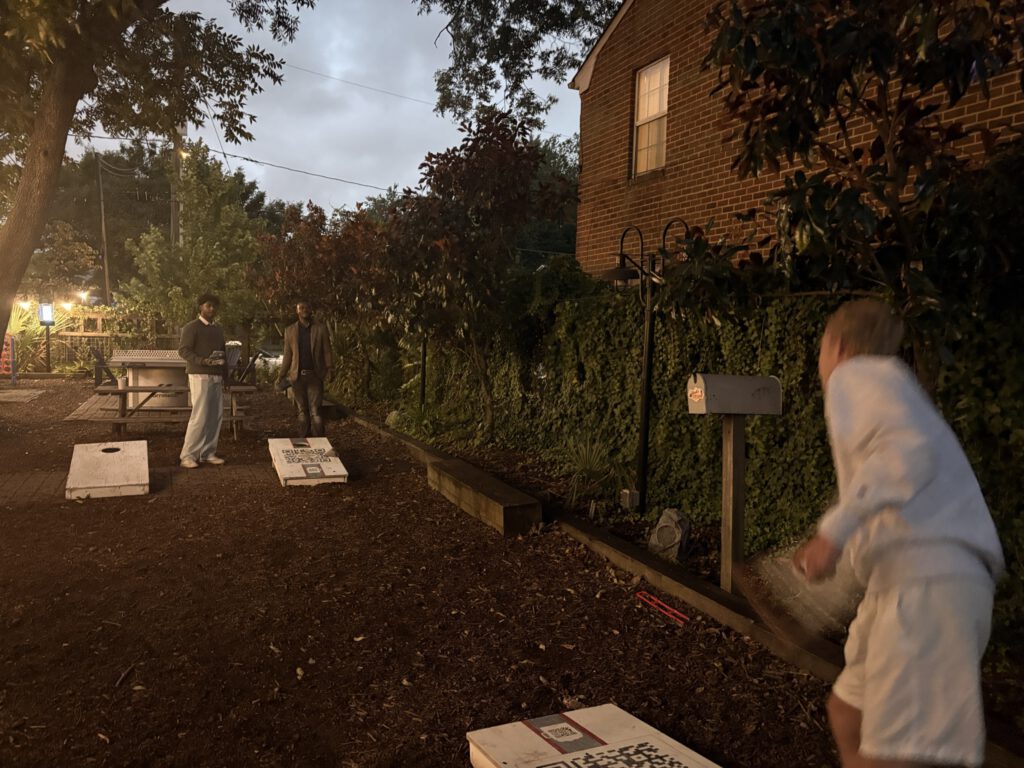
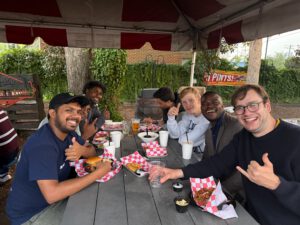
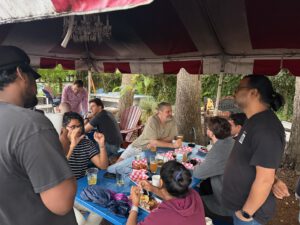
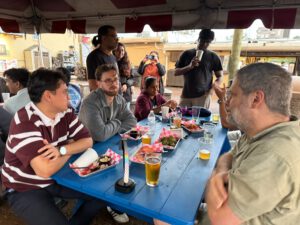
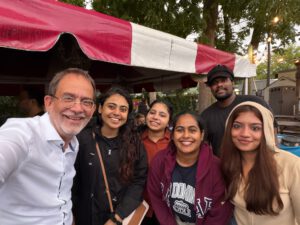
The evening turned into genuinely one of the best parts of the whole trip: good BBQ, drinks, and a couple of hours of easy, multicultural conversation with PhD students from all over the world – followed by darts and cornhole, which, if you’ve never seen it, is exactly what it sounds like: throwing bean bags at a hole in a wooden board, and somehow endlessly entertaining after the third round.
Wrapping up
From a former Madoff-era trader turned finance professor, to a lab converting algae into fuel, to a computer scientist who helped teach the internet to remember – this day was proof that a single day on one campus can cover more intellectual ground than you’d expect from a whole semester back home. And somehow it still ended with bean bags and BBQ sauce.